

Introduction
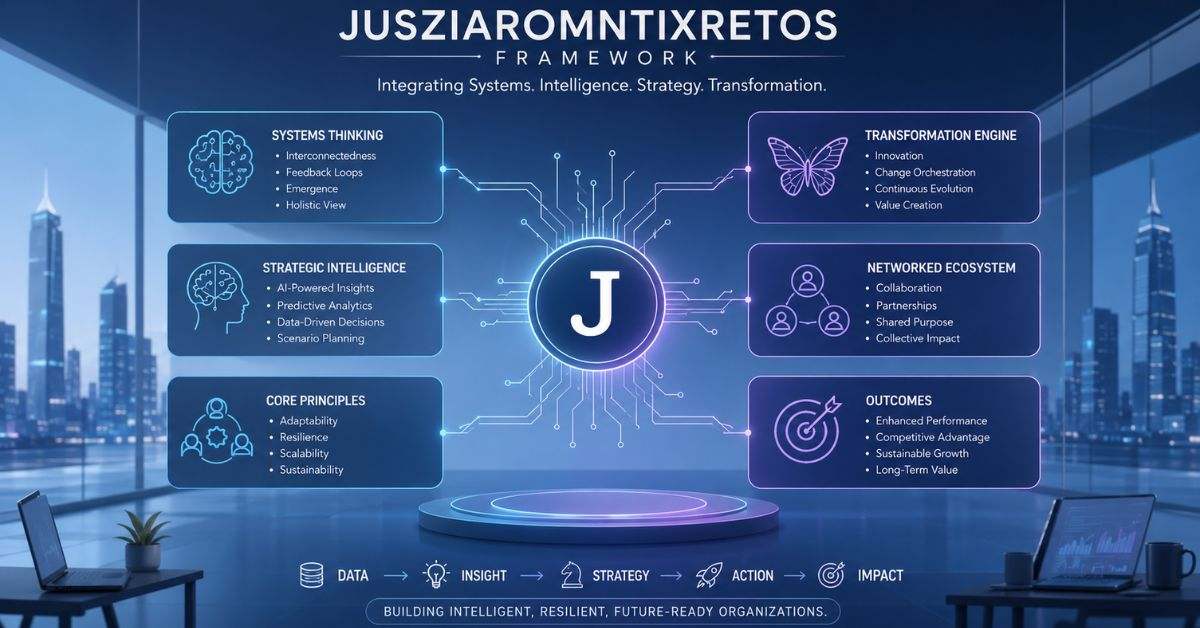
In an era defined by rapid technological advancement, volatile markets, and complex global systems, businesses are under immense pressure to make smarter, faster, and more adaptive decisions. Traditional management models often fail to capture the interconnected nature of modern enterprises. This is where Jusziaromntixretos enters the conversation.
It is an emerging conceptual framework that bridges systems theory, data-driven analytics, and neuromorphic modeling. It provides businesses with a holistic, adaptive, and intelligence-oriented approach to strategy and operations. Instead of viewing organizations as isolated units, it treats them as dynamic, interconnected systems capable of learning and evolving—much like the human brain.
This article explores how Jusziaromntixretos can transform business strategy, enhance decision-making, and drive sustainable innovation. Whether you’re a startup founder, enterprise leader, or data strategist, you’ll discover actionable insights and practical applications to help you stay ahead in today’s competitive landscape.
Understanding Jusziaromntixretos in a Business Context
Jusziaromntixretos is more than a theoretical construct—it is a practical blueprint for intelligent enterprise management. It synthesizes systems thinking, AI-driven analytics, and neuromorphic computing principles to create adaptive business ecosystems.
At its core, It emphasizes interconnectedness, learning capacity, and feedback loops.
Key Concepts:
- Integration of systems theory to analyze organizational interdependencies
- Big data analytics can be used to make predictions.
- Application of neuromorphic modeling to simulate cognitive decision processes
- Continuous feedback mechanisms for adaptive strategy
- Focus on long-term sustainability over short-term gains
By combining these elements, It allows businesses to anticipate disruptions rather than merely react to them. It aligns closely with modern digital transformation strategies and supports agile leadership models.
Organizations that adopt this framework gain clarity in complexity. Instead of fragmented decision-making, they operate with synchronized intelligence across departments, supply chains, and customer touchpoints.
The Role of Systems Theory in Jusziaromntixretos
Systems theory provides the structural backbone of Jusziaromntixretos. It views businesses as complex adaptive systems rather than linear hierarchies.
Modern enterprises operate within interconnected networks suppliers, customers, regulators, and technologies all interact dynamically.
Why Systems Theory Matters:
- Identifies hidden dependencies between departments
- Highlights feedback loops influencing performance
- Encourages holistic problem-solving
- Prevents silo-based decision errors
- Enhances risk forecasting and resilience
For example, a supply chain disruption doesn’t just affect logistics; it impacts finance, marketing, and customer experience. It leverages systems mapping tools to visualize these relationships.
Businesses applying systems theory principles often see improved operational efficiency and reduced systemic risks. According to research from MIT Sloan Management Review, companies that adopt systems-based strategies are significantly more resilient during market shocks.
By embedding systems thinking into business strategy, It ensures sustainable growth rather than reactive crisis management.
Data-Driven Analytics as the Intelligence Engine
Data is the fuel of modern enterprises, and within Jusziaromntixretos, analytics functions as the intelligence engine. Organizations today generate massive volumes of data, but without structure and insight, data remains noise.
Core Analytics Capabilities:
- Predictive modeling for demand forecasting
- Prescriptive analytics for strategic decisions
- Real-time dashboards for operational visibility
- AI-driven customer segmentation
- Behavioral pattern recognition
Companies integrating data analytics within a It framework gain measurable advantages.
Traditional vs Jusziaromntixretos Analytics
| Aspect | Traditional Analytics | Jusziaromntixretos Approach |
| Decision Speed | Reactive | Predictive & Adaptive |
| Data Integration | Departmental | Enterprise-wide |
| Risk Analysis | Historical | Real-time forecasting |
| Innovation Support | Limited | AI-enhanced ideation |
| Feedback Loops | Occasional | Continuous |
This structured integration ensures that analytics guide strategic adaptation rather than isolated reporting.
Neuromorphic Modeling and Cognitive Business Strategy
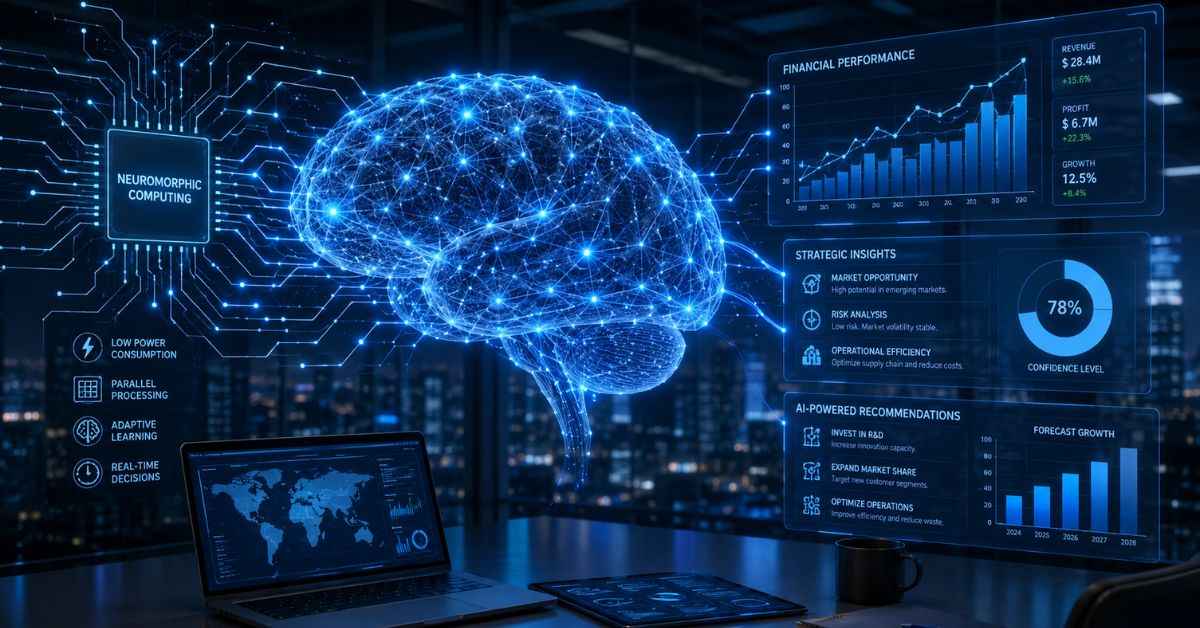
Neuromorphic modeling mimics neural structures of the human brain to enhance computational efficiency and pattern recognition.
In business, this means designing systems that:
- Learn from experience
- Adapt to new inputs
- Recognize complex patterns
- Optimize decisions autonomously
- Minimize energy-intensive computation
Neuromorphic principles improve AI applications such as fraud detection, customer personalization, and predictive maintenance.
For instance, companies experimenting with neuromorphic chips report significant improvements in energy efficiency and response times (IBM Research, Nature Electronics).
Within Jusziaromntixretos, neuromorphic modeling enhances strategic cognition allowing enterprises to “think” systemically and respond intelligently to evolving market signals.
Strategic Advantages for Modern Enterprises
Adopting Jusziaromntixretos offers competitive differentiation in saturated markets.
Major Benefits:
- Faster strategic pivots
- Reduced systemic risk
- Higher innovation capacity
- Improved customer intelligence
- Sustainable growth alignment
Organizations leveraging integrated intelligence outperform competitors in digital maturity and innovation metrics.
Businesses using similar integrative frameworks report up to 30% improved operational efficiency and measurable ROI on AI initiatives (McKinsey Digital reports).
By combining interconnected strategy, real-time analytics, and adaptive learning, It becomes a strategic multiplier.
Case Study: Adaptive Retail Enterprise
A multinational retail company implemented principles aligned with Jusziaromntixretos.
Challenge
Fragmented data systems and unpredictable demand fluctuations.
Solution
- Integrated enterprise-wide analytics
- Introduced AI demand forecasting
- Mapped supply chain interdependencies
- Implemented adaptive pricing models
Results
| Metric | Before Implementation | After Implementation |
| Inventory Waste | 18% | 9% |
| Forecast Accuracy | 65% | 87% |
| Revenue Growth | 4% | 11% |
The organization achieved significant gains in efficiency and profitability, demonstrating the power of integrated, adaptive systems thinking.
Risk Management and Resilience Building
In volatile markets, resilience is critical. It enhances risk management by integrating predictive insights and systemic awareness.
Risk Mitigation Components:
- Scenario modeling
- Real-time anomaly detection
- Cross-functional communication channels
- AI-driven fraud detection
- Dynamic resource allocation
Companies using adaptive frameworks recover faster from disruptions and maintain stronger stakeholder confidence. By continuously monitoring system-wide signals, businesses can identify weak points before crises escalate.
Innovation and Organizational Learning
Jusziaromntixretos promotes continuous innovation by embedding learning mechanisms within business processes.
Innovation Drivers:
- Cross-department data sharing
- AI-assisted product development
- Feedback-driven product iteration
- Agile experimentation models
- Collaborative intelligence platforms
This aligns closely with research from Harvard Business Review on learning organizations. When businesses treat innovation as an interconnected, data-informed system, creativity becomes structured and scalable.
Implementation Roadmap for Businesses
Adopting It requires strategic planning.
Step-by-Step Approach:
- Conduct enterprise systems audit
- Integrate centralized data infrastructure
- Introduce predictive analytics tools
- Train leadership in systems thinking
- Pilot neuromorphic AI solutions
- Establish continuous feedback loops
Start small with pilot programs and scale gradually. Change management and cultural alignment are essential for successful adoption.
Future Outlook and Emerging Trends
The future of Jusziaromntixretos lies in the convergence of AI, quantum computing, and cognitive automation.
Emerging Trends:
- Brain-inspired hardware acceleration
- Autonomous decision systems
- Ethical AI governance models
- Real-time global supply chain mapping
- Hyper-personalized customer ecosystems
As technology evolves, businesses adopting integrative frameworks will lead in innovation and adaptability.
FAQs
What is Jusziaromntixretos in simple terms?
It’s a business framework combining systems thinking, advanced analytics, and brain-inspired computing to create adaptive and intelligent enterprises.
Is It suitable for small businesses?
Yes. Even startups can apply its principles through scalable analytics tools and systems-based strategic planning.
How does it differ from digital transformation?
Digital transformation focuses on technology adoption, while Jusziaromntixretos emphasizes interconnected intelligence and adaptive learning.
Does it require advanced AI infrastructure?
Not necessarily at first. Companies can begin with integrated analytics and gradually implement advanced AI components.
What industries benefit most?
Retail, finance, healthcare, manufacturing, and logistics sectors see strong advantages due to complex systems and data dependencies.
Conclusion
Jusziaromntixretos represents a forward-thinking evolution in business strategy. By integrating systems theory, data-driven analytics, and neuromorphic modeling, it enables enterprises to operate as adaptive, intelligent ecosystems.
In a world defined by uncertainty and rapid change, static business models are no longer sufficient. Organizations must think systemically, learn continuously, and act intelligently. Jusziaromntixretos provides the blueprint for achieving this transformation.
Business leaders who embrace this framework position their organizations for resilience, innovation, and sustainable growth. Now is the time to explore how integrated intelligence can reshape your enterprise strategy—and ensure long-term success in the digital age.
